Virtual tourism
Stand inside Gwalior from anywhere
Each location below is an interactive 360° panorama. Drag across the image to look around, then tap a marked point to read what you're seeing. It runs in your browser — no headset or VR hardware involved.
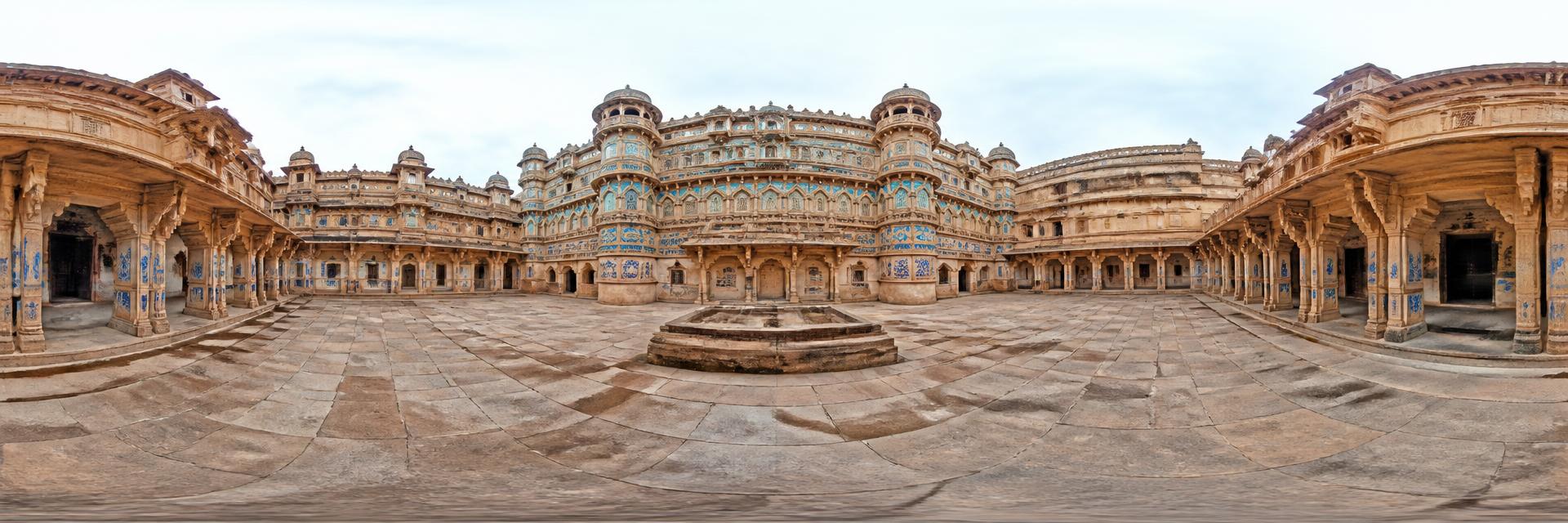
Interactive 360° view · drag to look around
Man Singh Palace courtyard
Points of interest
The tiled facade
Rows of glazed turquoise and yellow tiles depict ducks, elephants, peacocks and banana trees — a Tomar-era decorative language rarely seen elsewhere in central India.
The story of Gwalior Fort
The sandstone citadel that gave Gwalior its name
Rising almost 100 metres above the plains, Gwalior Fort has been fought over by the Tomars, the Mughals, the Marathas and the Scindias. Its ramparts stretch for kilometres along the ridge, and the climb up the eastern approach passes gateway after gateway.
Man Singh Palace, built for the Tomar ruler Man Singh in the late 15th century, is the fort's most photographed face — bands of turquoise and yellow glazed tiles run across its facade in rows of ducks, elephants and tigers.
Below the living quarters lie cool underground chambers where the court sheltered from the summer heat, and a plateau scattered with temples spanning six centuries of building.