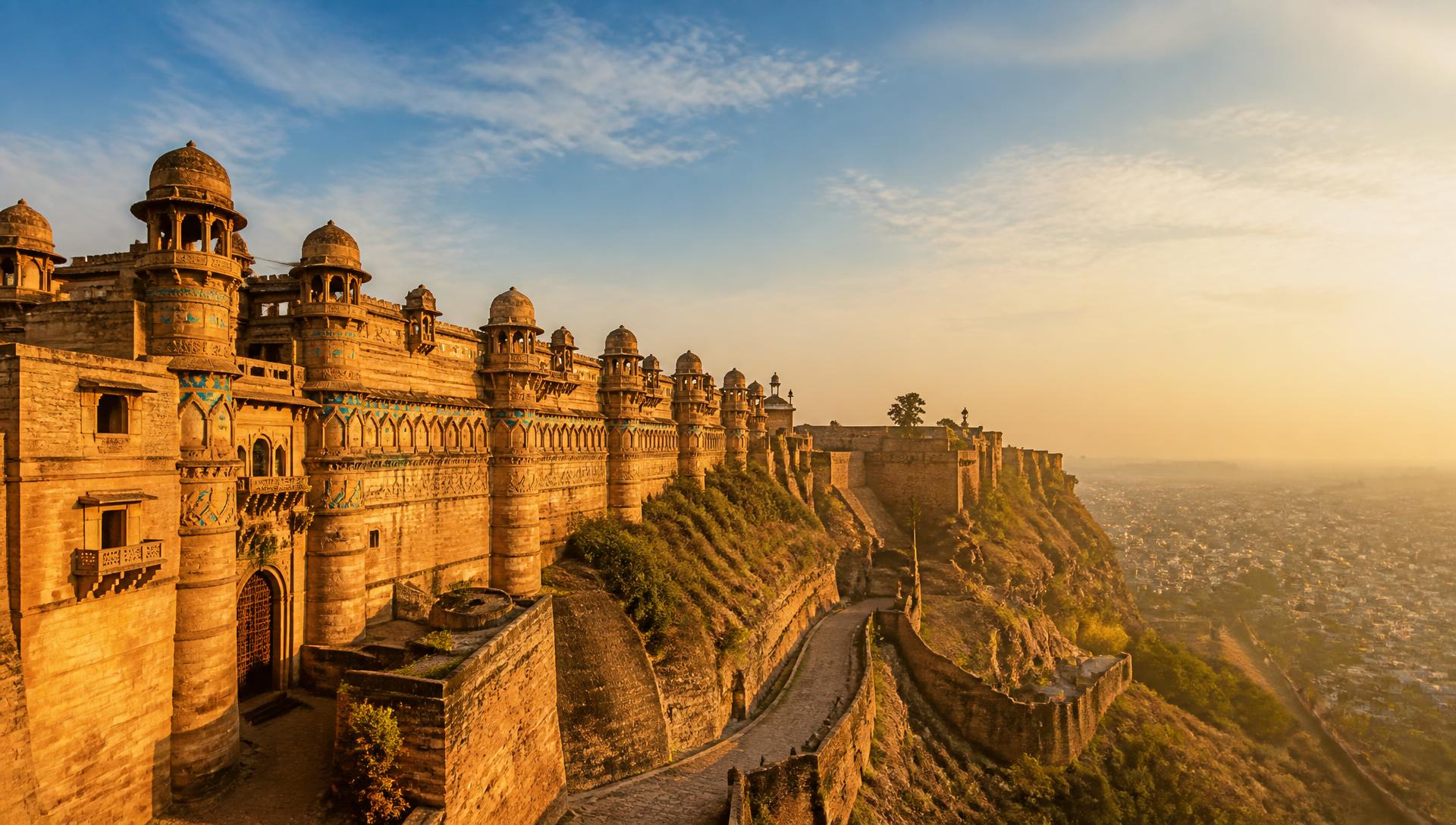
Madhya Pradesh · India
A fortress city carved in sandstone and song
Gwalior holds a thousand years of building on one hill — Tomar palaces, Jain colossi, an eleventh-century temple pair, and the tomb of the musician Tansen. Walk it in person, or explore it from wherever you are.
01 · Physical tourism
Here on the ground
Opening hours, ticket prices, how long each site takes, what sits nearby, and a map link that opens straight in your phone. Search by name or filter by the kind of place you want to see.
- Timings & entry fees for every site
- Location, map and directions
- Nearby attractions and visit duration
02 · Virtual tourism
Or from anywhere
Drag through interactive 360° panoramas of the fort courtyard, the Durbar Hall and the temple platforms. Tap the marked points to read the history behind what you're looking at.
- 5 panoramic locations
- Clickable hotspots with heritage notes
- Works in the browser — no headset needed
Where to begin
Three that define the city
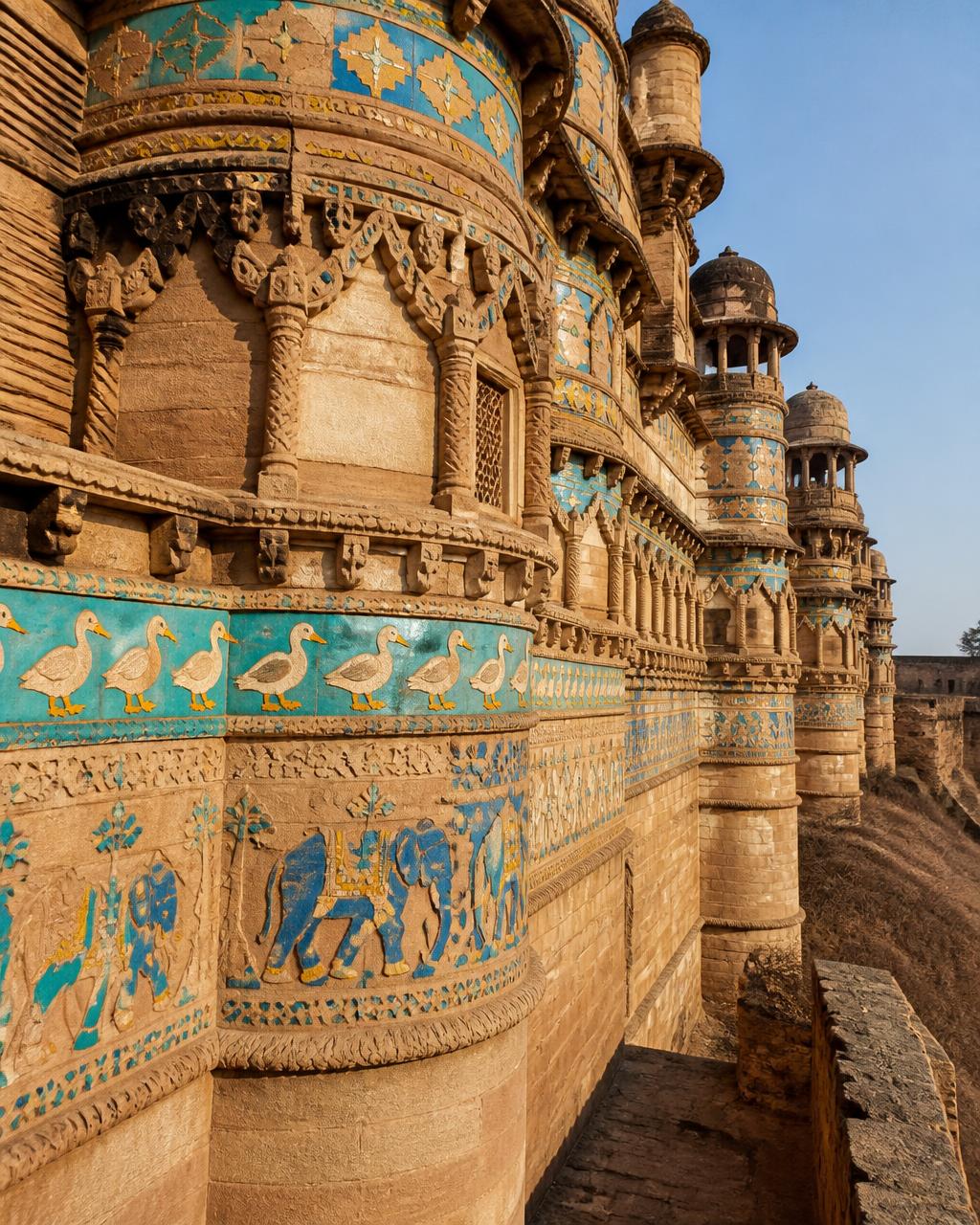 Forts360° tour
Gwalior Fort
6th century onwardsA hill fortress spread across a flat-topped sandstone plateau, holding palaces, temples and rock-cut sculpture within a single wall.
 Palaces360° tour
Jai Vilas Palace
1874The Scindia residence and museum, famous for its Durbar Hall, gilded interiors and a pair of enormous crystal chandeliers.
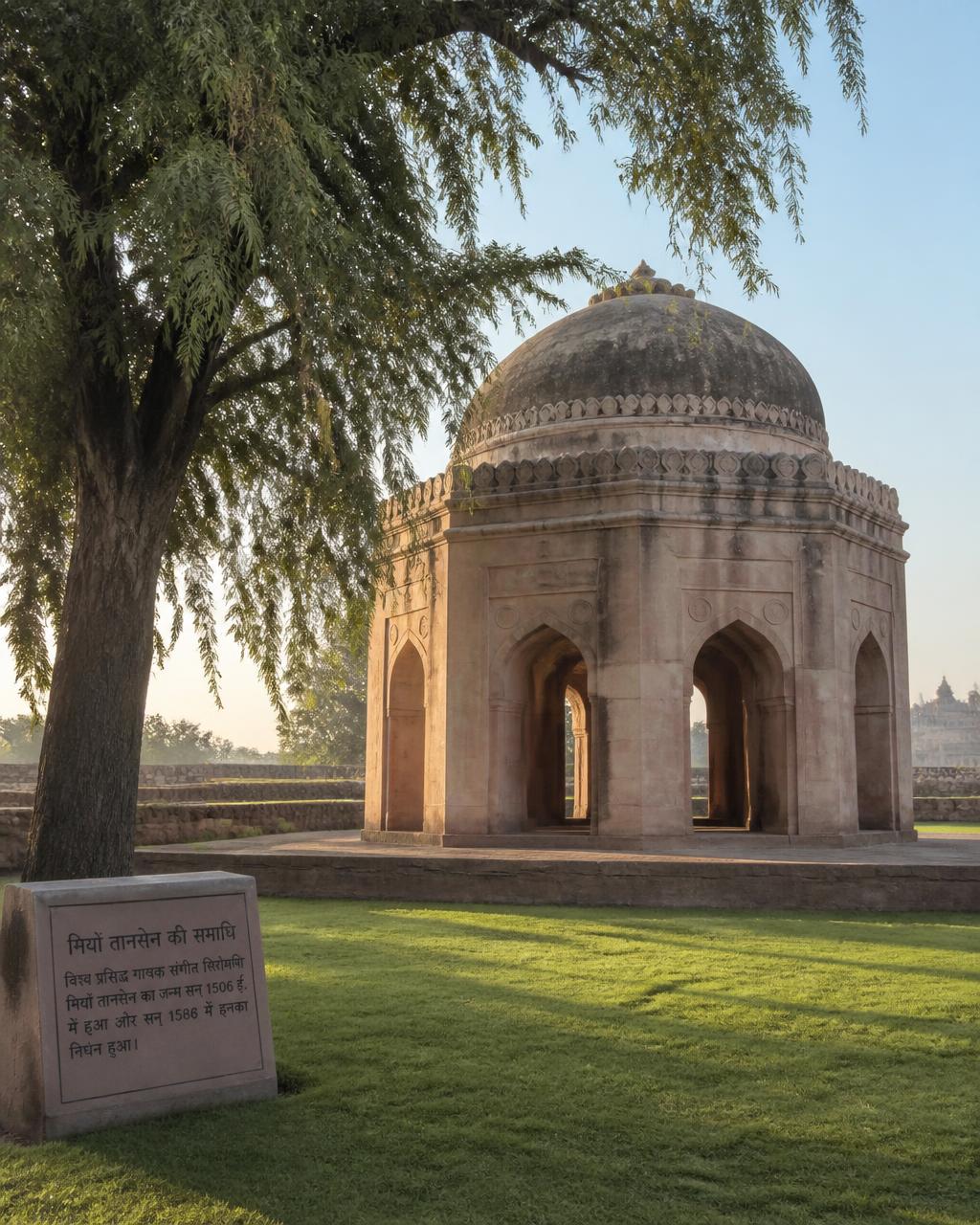 Memorials360° tour
Tomb of Tansen
16th centuryThe sandstone tomb of Tansen, the legendary musician of Akbar's court, set in a quiet walled garden beside the tomb of his teacher.
Best season
October – March
Cool mornings, clear light on the stone
Ideal stay
2 days
One for the fort, one for the city below
Getting there
Rail & air
Delhi–Bhopal line; Gwalior airport (GWL)
Local highlight
Tansen Samaroh
Classical music festival each December